Kansas State Fair
- 4.6
- Rating
- 10.00K
- Installs
- Free
- Price

 Analysis by App-foxy
Planning a visit to the Kansas State Fair is easier when the information you need is gathered in one place, and that is the purpose I found in the Kansas State Fair app. It is an official events app from the Kansas State Fair developer, aimed at people deciding what to do before arriving and trying to stay organized while they are there. I would not treat it as a general travel planner or a replacement for every tool on my phone. I see it as a focused companion for fair-related decisions.
That distinction matters. A fair visit can involve several kinds of planning at once: deciding which activities deserve time, checking details while moving around, coordinating with family or friends, and avoiding the feeling that the day disappeared before you reached the things you cared about. A dedicated app can be more convenient than searching the web repeatedly, but only if its focused approach matches the way you plan to attend.
How I Decide Whether This Fair App Is Worth Using
My first test for an event app is simple: does it reduce decisions, or does it create another place to check? For the Kansas State Fair app, I would begin by asking whether my visit is casual or carefully planned. If I am attending for a short time, bringing children, meeting people at different points, or trying to fit several interests into one day, the official app makes more sense than relying only on memory and scattered searches.
You May Also Like

 Blood Strike: 2.5 Anniversary
Blood Strike’s Loadouts Turn Every Drop Into a Tactical Gamble
A close look at Blood Strike’s custom loadouts: how fast access to signature weapons reshapes its battle royale rhythm, rewards preparation, and narrows the gap between fights.

 Pandora - Music & Podcasts
Pandora’s Music Is Easy to Start, but Harder to Recover
Pandora’s strength is its low-effort path from a seed to a station. Its weak spot is how much confidence it asks you to place in connection, setup, and quiet recovery.

 8 Ball Pool
 Is Built on Rivalries, Rematches, and Routine
A close look at the rivalries, rematches, shared routines, and unanswered safety questions that turn a quick pool match into a persistent mobile community.

 Samsung Music
’s Quiet Strength Is Playing What You Already Own
Its reach comes less from spectacle than from dependable access to a personal library. That simplicity is both the app’s strongest retention engine and its ceiling.

 AccuWeather: Weather Radar
AccuWeather Review: A Quick, Clear Forecast for Everyday Decisions
For everyday plans, the best forecast is the one you can understand quickly. AccuWeather makes rain timing, radar, and local conditions easy to act on, with a few trade-offs.

 Hill Climb Racing
Why Hill Climb Racing Still Turns Crashes Into One More Run
A tiny car, a bumpy hill and one more upgrade: Hill Climb Racing keeps resurfacing because its simple chaos makes every near-miss feel personal.
More From Our News Desk



I would also consider how much I need from an app before downloading it. Someone who only wants a broad sense of the fair may be satisfied with a browser search. Someone who already has a printed plan or knows the grounds well may not gain much. The strongest reason to use this app is not that it replaces every other source; it is that it keeps the fair itself at the center of the planning process.
The app is free, which removes the most obvious barrier to trying it. It is suitable for Everyone, and it runs on Android devices using version 6.0 or later. That makes it approachable for households using a mixture of newer and older phones. I still recommend installing it before leaving home rather than waiting until the entrance, because event-day preparation is when a focused tool is most useful.
The public response is encouraging without being a reason to download blindly. It holds a 4.6 average from around twenty ratings, with five written reviews, and has passed ten thousand installs. I read those figures as a sign that the app has found a real audience, not as proof that every visitor will have the same experience. A small review sample can indicate satisfaction while leaving plenty of room for different expectations.
What I Would Set Up Before Leaving
I would open the app when I still have time to think, not while walking through a crowded entrance. My first pass would be about orientation: learning how the app presents the fair and identifying the information I am most likely to need. My second pass would be more selective, focused on the particular people coming with me and the amount of time available.
That two-pass approach is more useful than trying to absorb everything at once. Families often overestimate how many stops fit into a day, while solo visitors can waste time moving between loosely chosen ideas. I would choose a small group of priorities, keep a few flexible options, and use the app as a reference rather than turning the visit into a rigid checklist.
For a group, I would also agree on a simple meeting habit before arriving. A dedicated event app can help everyone look at the same fair information, but it does not automatically solve the human problem of people separating, losing battery, or changing their minds. The practical advantage comes from combining the app with a clear plan: one or two priorities, a time to regroup, and enough flexibility for unexpected stops.
A less obvious benefit is reducing repeated conversations. Instead of one person becoming the permanent information source, each member of a group can check the official reference directly. That is particularly useful when adults are managing different interests. It does not guarantee that everyone will agree, but it can make the discussion more concrete and reduce the back-and-forth caused by incomplete information.
Where the Official Focus Helps Most
The app’s biggest strength is its narrow purpose. Because it is the official app of the Kansas State Fair, I would choose it when my questions are specifically about the fair rather than about the surrounding city. That focus is valuable during the transition from planning to attending. A general search engine may return broad results, older pages, social posts, or unrelated attractions; an official fair app is a more natural starting point for fair-centered information.
I also like the idea of having one recognizable reference during a busy day. Event visits are full of interruptions, and the best planning tool is often the one I can return to quickly without remembering which website contained which detail. The app’s role is not glamorous, but that kind of continuity can make a difference when plans change.
Another useful insight is that an official app works best as a decision filter. I would not open it merely to browse endlessly. I would use it to answer practical questions such as what deserves attention first, what can wait, and whether a change in timing affects the rest of the day. That mindset helps prevent the common mistake of treating every available option as equally important.
For a first-time visitor, this can lower the mental load of arriving without a plan. For a returning visitor, it can be a quick way to refresh the visit rather than assuming that last year’s routine still fits. In both cases, the app is most helpful when it supports choices instead of becoming another source of scrolling.
Where a Browser or Other App May Be Better
I would not use this as my only planning tool for a broader trip. If I need lodging, restaurants, driving directions, weather, public transit, or a complete itinerary for the surrounding area, a map app, travel service, or browser will usually be better suited to those jobs. Those alternatives are designed to connect multiple destinations and services, while this app is specifically tied to the Kansas State Fair.
That is not a flaw so much as a boundary. A focused event app can be clearer because it does not try to become a universal travel assistant. The trade-off is that I may still need other apps for the journey to and from the fair. Someone who wants one application to manage every part of a weekend may find that separation inconvenient.
I would also be cautious about depending on any event app as the sole source of urgent, last-minute decisions. If my plan hinges on a detail that affects travel, accessibility, timing, or a major family commitment, I would verify it through the most current official channel available before setting out. That is a sensible habit with event information generally, especially when conditions can change.
Visitors who dislike installing apps may reasonably prefer the mobile web or printed information if those options meet their needs. The app is not automatically better simply because it is official. Its value depends on whether having a dedicated reference is more convenient than using the alternatives already familiar to you.
A Realistic Day-Planning Example
Imagine I am taking my family to the fair for one day, with limited patience for unnecessary walking and different ideas about what makes the visit worthwhile. Before leaving, I would use the app to build a short priority list rather than promise that we will see everything. I would identify the items most important to the children, reserve room for food and unplanned discoveries, and agree that the group will reassess after the first major part of the visit.
Once there, I would use the app at natural pause points instead of constantly checking it while moving. After arriving, I would review the plan. Later, I would consult it again when the group is ready to choose the next direction. This workflow keeps the phone useful without allowing it to dominate the outing. It also creates a practical fallback: if one planned stop no longer suits the group, I can make a new choice without starting the research process from zero.
The trade-off is that the app cannot decide what my family values. It can organize access to fair information, but I still have to balance age, energy, weather, budget, and attention span. That is why I would avoid building a minute-by-minute schedule. The more detailed the plan, the more fragile it becomes when one delay affects everything after it.
For a solo visitor, the same app could support a different rhythm. I might use it to select a few priorities, then leave the rest of the day open. That is where a focused official guide can be more helpful than a large collection of online recommendations: it keeps my choices connected to the event I am actually attending.
Small Habits That Make It More Useful
My first practical tip is to separate must-see items from nice-to-see items before arriving. This sounds obvious, but it changes how I react when the day becomes crowded or tiring. The app can be a reference for the options; my own categories decide what gets protected when time runs short.
My second tip is to plan around people, not just attractions. If I am visiting with children or older relatives, I would leave breathing room between decisions and avoid assuming that the fastest route on paper will feel comfortable in practice. A fair visit is not a race, and an app should support a manageable pace rather than encourage overbooking.
My third tip is to use it as a shared conversation starter. Before the visit, I would ask each person to choose one priority. That turns the app into a simple coordination tool and makes disagreements easier to handle. Instead of arguing over an endless list, the group can compare a few specific choices and decide what fits the day.
A fourth useful habit is to review the plan after the first major stop. If the group is already tired, I would simplify the rest of the day. If we have more time and energy than expected, I would add one flexible option. This is a better use of an event app than treating the first plan as a contract.
What the Version and Developer Signal
The app is currently at version 3.0.2, and it was released on August 12, 2024. I would take that as a reason to check for updates before a visit, especially if I installed it well ahead of the event. Event applications are most valuable when their information is current, so keeping the app updated is a small step with practical importance.
Knowing that Kansas State Fair is the developer also makes the app’s purpose clear. I would expect the experience to be centered on this particular fair rather than a broad platform for unrelated events. That specialization is exactly why I would choose it over a generic event-discovery app when my destination is already decided.
At the same time, official status should not make me ignore basic preparation. I would keep my phone charged, avoid relying on one device for the whole group, and maintain a simple backup plan for meeting up. Those are not criticisms of this app; they are sensible safeguards for any busy public event where people may become separated.
Who Should Download It and Who Can Skip It
I recommend trying it if you are attending the Kansas State Fair for the first time, bringing a group with different priorities, or visiting for a limited window. It is especially suitable for people who prefer making a lightweight plan before arriving and then adjusting it as the day develops. Since it is free and rated for Everyone, there is little practical downside to testing whether its focused approach fits your habits.
I would be less enthusiastic for someone who already has a complete routine, does not want another app on their phone, or is mainly looking for citywide travel planning. In those cases, a browser, map service, or existing travel organizer may be more efficient. The app is not a universal answer, and forcing it into a role it was not designed for would make the experience feel limited.
I would also skip it if I expect a fully personalized itinerary that automatically manages every part of my day. The value here is in official fair-focused reference and planning support, not in handing over all decisions. Visitors who enjoy spontaneous wandering may only need a quick look before leaving, while careful planners can get more from using it as a structured starting point.
My Recommendation After Weighing the Trade-Offs
My recommendation is straightforward: download the Kansas State Fair app if the fair is your main destination and you want an official, focused way to prepare. I would use it before the visit to narrow choices, during the day to revisit the plan, and alongside a map or travel app for everything outside the fair itself.
What makes it worthwhile is not a claim that it can replace every alternative. It wins by keeping fair-specific planning together and by giving visitors a common reference when a group needs to choose what comes next. The cost of switching is small because it is free, but the real question is whether you prefer a dedicated event tool over familiar browser searches and general-purpose apps.
My final advice is to keep expectations practical. Install it before you go, use it to create priorities rather than an overloaded schedule, and leave room for the fair to surprise you. For a first visit or a group visit, that balance can make the day easier to manage. For a broader travel itinerary, pair it with other tools. As a focused companion for Kansas State Fair planning, it earns my recommendation.
In short, I see this as a sensible download for visitors who want preparation without turning the outing into a project. It is free, accessible on older Android versions, and built by the fair itself. I would not ask it to handle jobs outside its lane, but within that lane it offers a clear reason to be on my phone before and during the visit.
FAQs for Kansas State Fair
01What is the Kansas State Fair app used for?
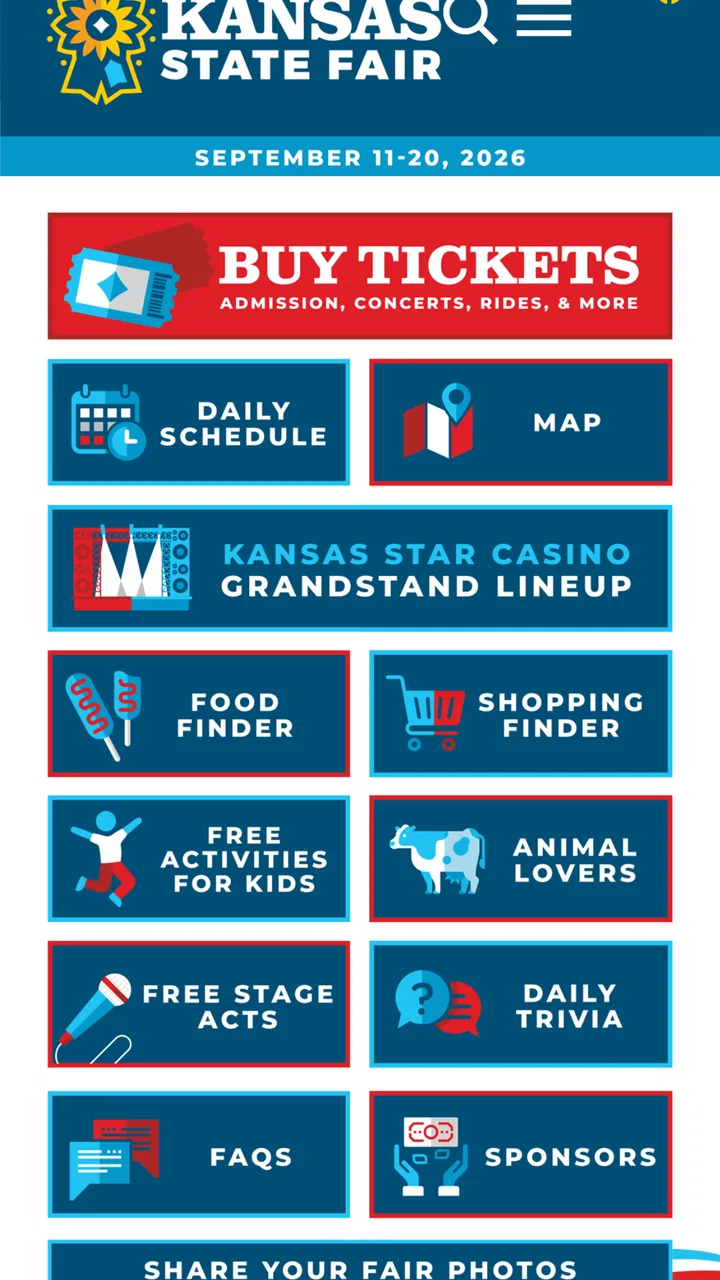
The Kansas State Fair app is designed to help visitors plan and enjoy their time at the annual fair in Hutchinson, Kansas. It can provide useful information such as event schedules, entertainment details, maps, food and vendor locations, attractions, announcements, and other visitor resources. It is especially helpful for checking what is happening during your visit without carrying a printed program.
02Does the Kansas State Fair app include the complete event schedule?
The app is intended to make the fair’s daily schedule easier to browse, including concerts, competitions, demonstrations, family activities, livestock events, and other featured programs. Schedule information may change because of weather, performer availability, or operational decisions, so visitors should still check in-app announcements or official fair updates for last-minute changes before heading to a particular event.
03Can I use the app to find food, vendors, attractions, and fairgrounds locations?
Yes, one of the most useful reasons to install the Kansas State Fair app is to explore the fairgrounds more efficiently. Depending on the current version, it may help you locate food stands, shopping vendors, attractions, entertainment stages, livestock areas, restrooms, entrances, and other facilities. A map or directory can save time, particularly when visiting with children or during busy periods.
04Does the Kansas State Fair app provide information about tickets and admission?
The app may include admission details, ticket information, promotions, gate hours, parking guidance, and links to official purchasing pages. However, ticket prices, discounts, entry policies, and special offers can vary by year or by event day. Before purchasing, review the current information shown in the app and confirm important details through the official Kansas State Fair website.
05Is the Kansas State Fair app free, and does it require an internet connection?
The Kansas State Fair app is generally available as a free download, although normal mobile data charges may apply when using cellular internet. Some information may remain accessible after it loads, but features such as updated schedules, announcements, maps, or external ticket links can require an internet connection. Download or open the app before arriving, and consider using Wi-Fi when possible.
Pros
- Provides schedules
- maps
- and event details in one convenient place.
- Helps visitors discover livestock shows
- concerts
- rides
- and food vendors.
- Useful for planning visits around daily activities and special events.
- Can make navigating the fairgrounds easier with location information.
- Official updates may help users stay informed about changes and announcements.
Cons
- Information may become outdated between annual fair editions.
- Some features may depend on an active internet connection.
- The app is mainly useful during the Kansas State Fair period.
- Event details may vary by year and require frequent updating.
- Users may still need separate ticket or payment services for purchases.

Kansas State Fair
Gallery